
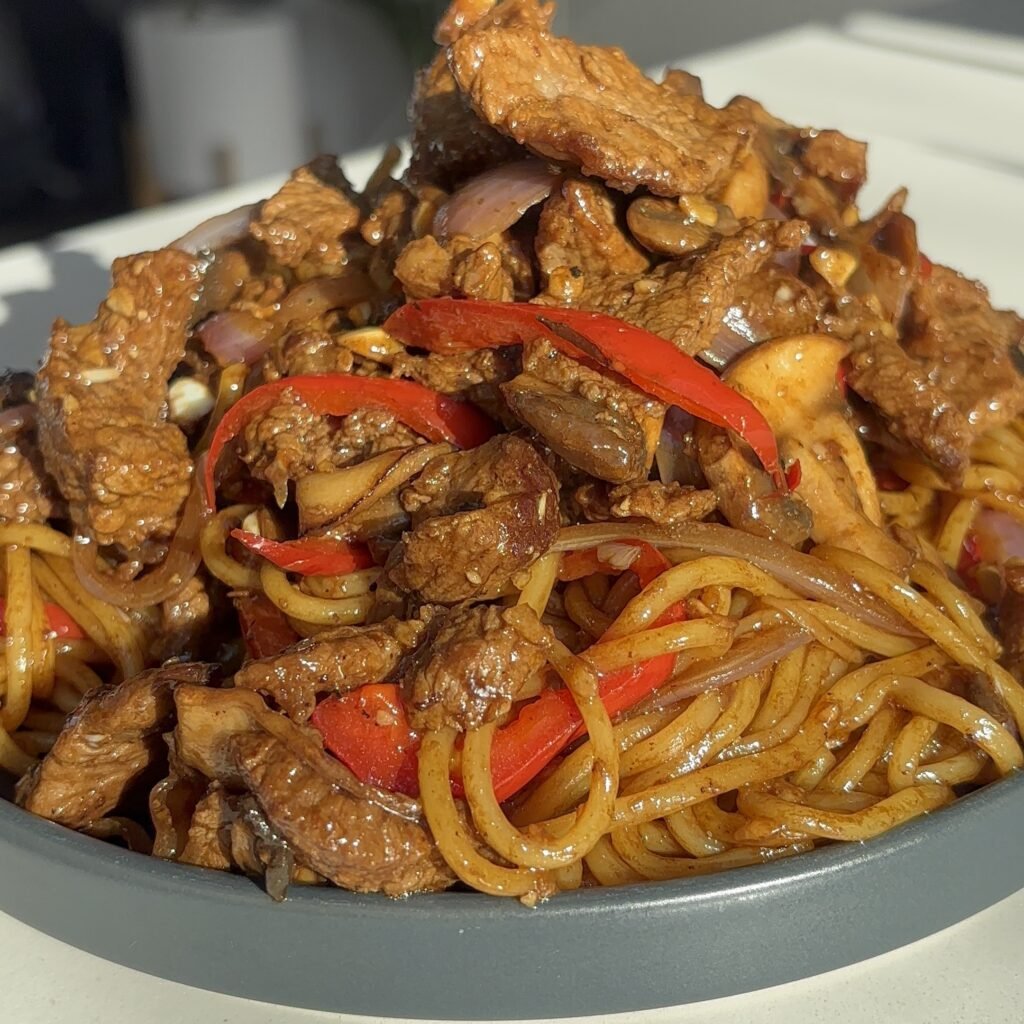
Black pepper beef is one of those dishes that every Chinese takeout menu gets wrong in the same way — too much sauce, not enough heat, beef that's been cooked past the point of tenderness. This homemade version fixes all of that. Ribeye or roast beef marinated in soy, dark soy, cornstarch, and olive oil, seared until browned and set aside, then brought back together with sautéed garlic, bell pepper, mushroom, and red onion in a glossy black pepper sauce that is bold, savory, and just spicy enough to make the whole dish feel alive. And then fresh egg noodles go in — boiled, shocked in cold water, and stir-fried directly into the beef and vegetables until everything is coated in a deep, mahogany-colored sauce that clings to every strand. This is a proper noodle dish.
The Marinade Does Most of the Work Combining soy sauce, dark soy sauce, cornstarch, black pepper, and olive oil into a quick marinade and massaging it into the beef for ten minutes before cooking produces a result that tastes like the beef was seasoned for hours. The cornstarch creates a light coating that helps the beef sear evenly and protects the surface from drying out in the hot wok. The dark soy adds an immediate depth of color and a slightly caramelized richness that infuses the meat before it ever hits the pan. A ten-minute marinade with the right ingredients is all it takes.
Sear the Beef First, Finish It Last Searing the beef until browned and removing it before the vegetables go in is the technique that keeps it tender all the way to the table. Beef cooked directly with vegetables over the full cooking time toughens and dries out — the sustained heat and the moisture released by the vegetables continue cooking it past its ideal temperature. Pulling it out after the initial sear and returning it only when the sauce goes in means it finishes cooking in the residual heat of the wok, staying exactly as tender as the sear left it.
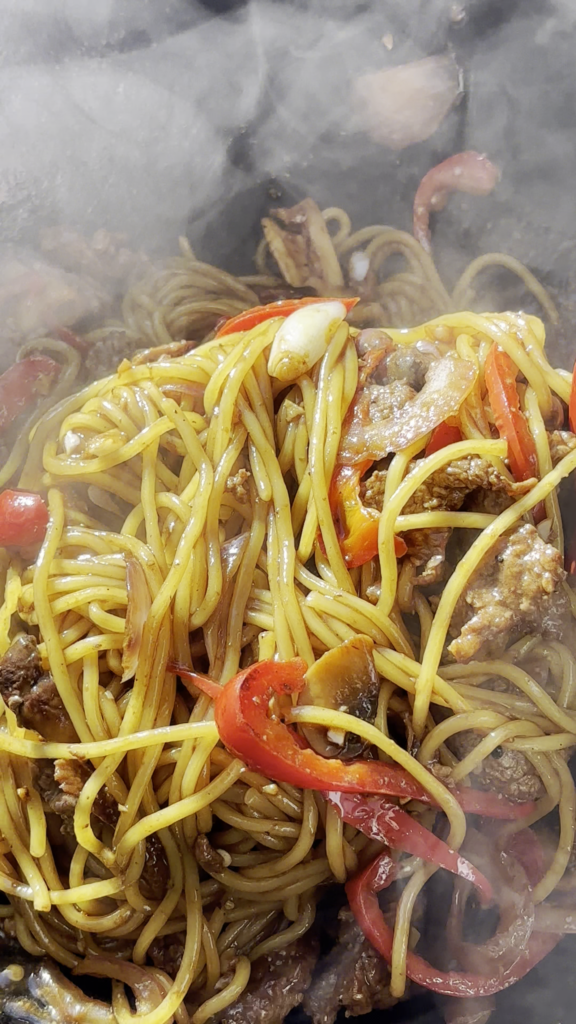
Fresh Egg Noodles Absorb the Sauce Like Nothing Else Adding fresh egg noodles at the end is the step that transforms this from a beef stir fry into a complete, deeply satisfying noodle dish. Boiled for two to three minutes until just cooked, shocked in cold water to stop the cooking and remove excess starch, then stir-fried directly into the wok with the beef and sauce — the noodles pick up the glossy black pepper sauce on every strand and absorb the residual cooking wine and dark soy from the pan. A final drizzle of dark soy for color at the end deepens the mahogany tone of the finished dish and adds one last hit of savory depth.
Beef (1 lb, ribeye or roast) — Ribeye is the first choice for its marbling and tenderness under high-heat wok cooking. Roast beef cut against the grain also works beautifully. Slice thin — about 3 to 4mm — for the fastest, most even sear and the most tender result.
Red Bell Pepper, Mushroom, Red Onion — The vegetable trio that provides sweetness, earthiness, and bite alongside the beef. Sliced to a similar thickness so they cook evenly together. The red onion caramelizes slightly at the edges as it softens, adding a natural sweetness that balances the heat of the black pepper.
Garlic (4 to 5 cloves) — Whole cloves or roughly smashed — added to the oil before the vegetables to infuse the cooking fat with deep, savory garlic flavor before anything else goes in.
Cooking Wine (2 tbsp) — Added as a splash when the beef returns to the wok, it creates an immediate burst of fragrant steam that lifts the caramelized bits from the bottom of the pan and adds a fermented sweetness to the sauce.
Black Pepper Sauce — A combination of soy sauce, oyster sauce, cornstarch, and water that thickens quickly in the hot wok into a glossy, coating sauce. The cornstarch is what gives it the body to cling to the beef and noodles rather than running to the bottom of the pan.
Fresh Egg Noodles (1 strand/portion) — Fresh egg noodles, available at any Asian grocery store, have a bouncy, slightly chewy texture that holds up to stir-frying far better than dried noodles. Boil for 2 to 3 minutes, drain, and shock in cold water before adding to the wok.
Combine the beef with soy sauce, dark soy sauce, cornstarch, black pepper powder, and olive oil. Massage well and let rest for 10 minutes.
While the beef marinates, prep the garlic, bell pepper, mushroom, and red onion. In a separate pot, bring water to a boil for the noodles.
Heat a wok with oil over high heat. Add the marinated beef in a single layer and sear undisturbed until browned on one side, then toss and sear the other side. Remove and set aside — it does not need to be fully cooked through.
Add more oil to the wok. Add the garlic and cook until fragrant. Add the bell pepper, mushroom, and red onion and sauté for about 2 minutes until the onion becomes slightly soft and translucent.
Return the seared beef to the wok. Add a splash of cooking wine around the edge of the pan and toss everything together.
In a small bowl, combine the soy sauce, oyster sauce, cornstarch, water, and a pinch of salt. Pour into the wok and toss everything together until the sauce thickens and coats all the ingredients evenly. Cook for 2 to 3 minutes.
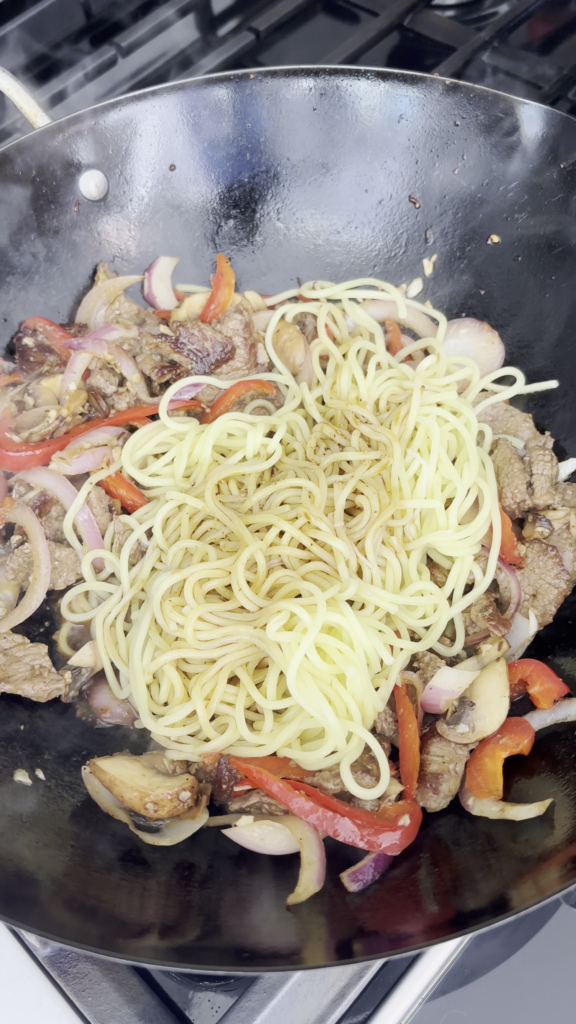
Meanwhile, boil the fresh egg noodles for 2 to 3 minutes until just cooked. Drain and immediately rinse under cold water to stop the cooking and remove excess starch.
Add the noodles directly to the wok with the beef and sauce. Toss everything together over high heat until the noodles are evenly coated. Drizzle extra dark soy sauce over the noodles for deeper color and a final hit of savory flavor. Serve immediately.
Don't move the beef during the initial sear. Place it in a single layer and leave it completely undisturbed for 60 to 90 seconds until the bottom develops a proper golden-brown crust. Moving it too early prevents the Maillard reaction from completing and produces pale, steamed-looking beef instead of the deep sear you want.
Rinse the noodles in cold water immediately after boiling. This stops the cooking, prevents them from sticking together, and removes the excess surface starch that would make the finished dish gluey when the noodles hit the sauce in the wok.
Mix the sauce in a bowl before cooking starts and have it ready to pour in immediately after the cooking wine. The sauce thickens quickly in a hot wok and you want to toss everything evenly before it sets — having it pre-mixed means no scrambling at the critical moment.
Serve immediately directly from the wok while the sauce is still glossy and the noodles are at peak texture. Plate in a wide bowl or on a large plate and garnish with sliced scallion and a crack of fresh black pepper over the top. This dish is a complete meal on its own — protein, vegetables, and noodles in one pan. A simple side of stir-fried greens or a light soup alongside makes it a full spread.
Store in an airtight container in the refrigerator for up to two days. The noodles will absorb the sauce as they sit and become slightly softer — reheat in a hot pan with a small splash of water and a drizzle of soy sauce to loosen and re-season. Not suitable for freezing as the noodles become mushy after thawing.
For extra heat, add a tablespoon of chili crisp or a teaspoon of ground Sichuan peppercorn to the sauce mixture before adding it to the wok. For a more vegetable-forward version, double the bell pepper and mushroom and reduce the beef to half a pound. For a different noodle, thick udon or fresh ramen noodles both work well in place of egg noodles — adjust the boiling time based on the package instructions.
Can I use a different cut of beef? Flank steak or sirloin both work well as alternatives to ribeye. Slice against the grain into thin pieces for the most tender result. Avoid very lean cuts that will tighten and become chewy in the hot wok.
Why add dark soy at the end for the noodles? Dark soy sauce has a deeper color and a slightly sweeter, more caramelized flavor than regular soy — adding it at the noodle stage specifically gives the finished dish that rich mahogany color that makes it look as impressive as it tastes. It also adds one final layer of seasoning to the noodles as they absorb the sauce.
Can I use dried noodles instead of fresh? Yes — cook dried noodles according to package instructions, then drain and rinse in cold water before adding to the wok. Fresh egg noodles are preferred for their texture and how they absorb the sauce, but dried noodles produce a good result.
Seared marinated ribeye, sautéed vegetables, and a bold black pepper soy sauce tossed with fresh egg noodles in one wok — a deeply flavored, restaurant-quality black pepper beef noodle stir fry ready in under 30 minutes.