
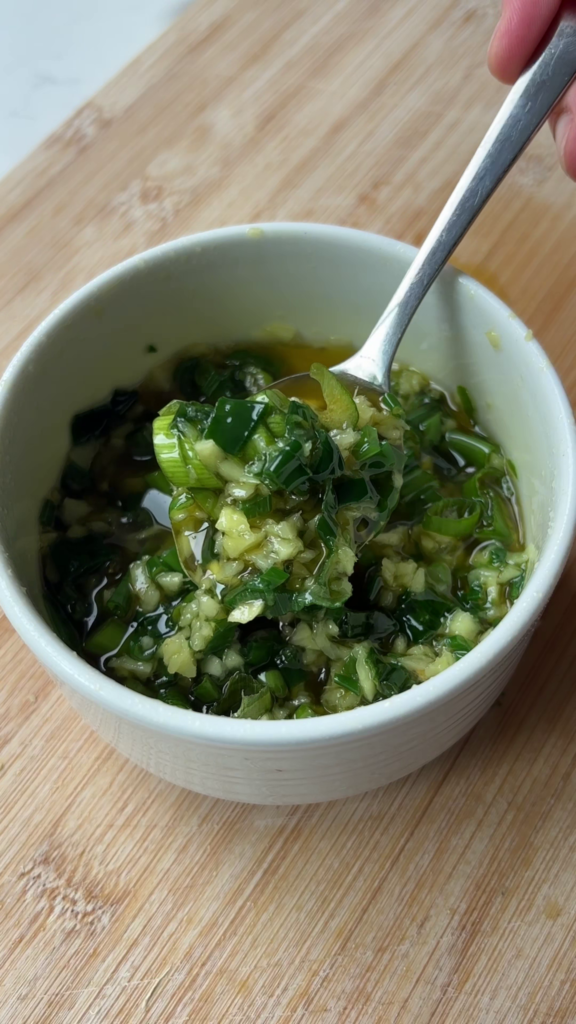
If you've ever eaten at a Cantonese restaurant and wondered why the simplest dishes — plain poached chicken, steamed fish, a bowl of white rice — taste so much better than anything you make at home, ginger scallion sauce is usually the answer. It's one of those condiments that seems almost too simple to be as good as it is: just ginger, scallions, salt, and hot oil. Four ingredients. Five minutes. And yet it's the kind of thing that makes you want to pour it on everything at the table.
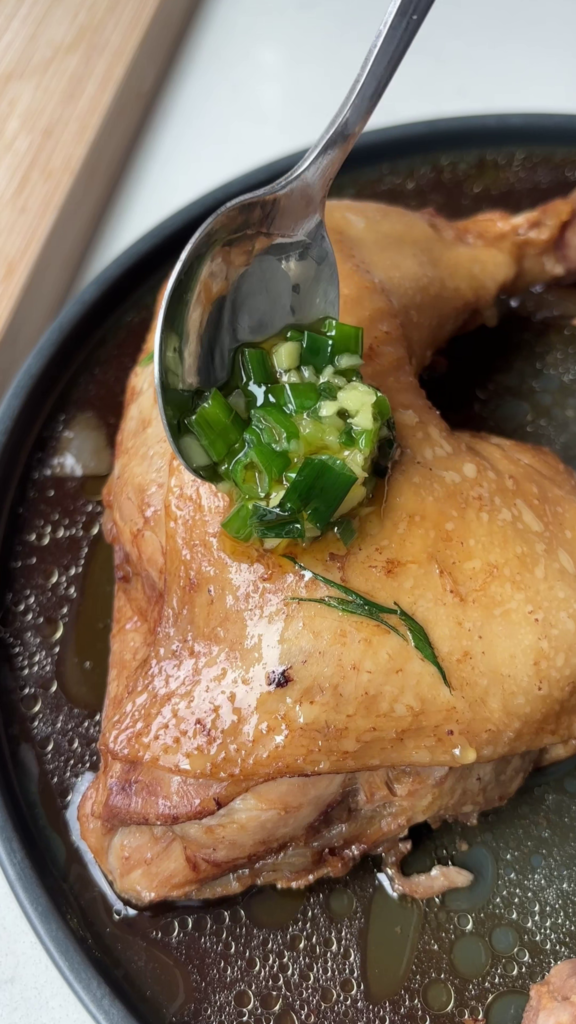
This sauce has been a cornerstone of Cantonese cooking for generations, most famously served alongside White Cut Chicken — the classic Cantonese dish of gently poached whole chicken served at room temperature. But calling it a "chicken sauce" dramatically undersells it. This is an all-purpose condiment in the truest sense: it belongs on noodles, grilled fish, steamed tofu, roasted vegetables, fried eggs, and honestly, a spoon straight from the bowl. Once you make it, you'll understand why Cantonese cooks keep a jar of it in the refrigerator at all times.
The technique at the heart of this sauce is what separates it from a simple chopped herb relish. Ginger and scallions are placed in a bowl and then hit with oil at its smoke point — not warm oil, not medium-heat oil, but oil that is fully heated to the edge of smoking. When that oil hits the aromatics, you hear a violent, crackling sizzle. That sound is the essential oils in the ginger and scallions being instantly released and locked into the fat around them. The heat is high enough to bloom the aromatics without cooking them into softness — they retain their bite, their color, and their freshness while their flavor becomes concentrated and deeply fragrant.
This is the same principle behind blooming spices in Indian cooking or making chili crisp — hot fat as a flavor extraction tool. The difference between pouring warm oil and smoking-hot oil over these aromatics is enormous. One produces a mild, pleasant sauce. The other produces something you'll want to eat with a spoon.
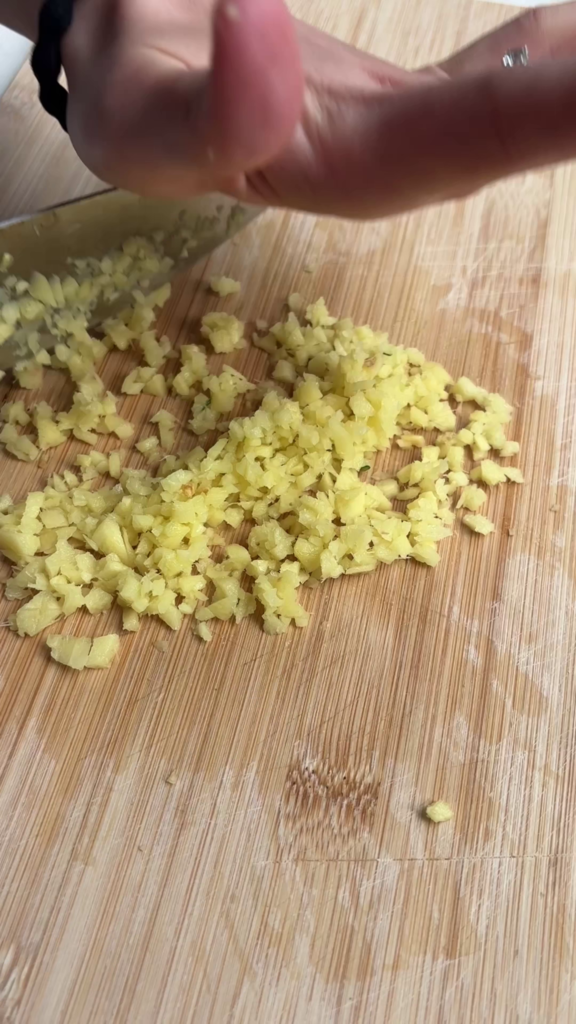
Most recipes that involve ginger and scallions reach for a blender or food processor. This one deliberately doesn't. Hand-chopping the scallions keeps them bright, textured, and distinct — they retain a slight snap and a clean green color rather than turning into a pale, oxidized paste. The ginger gets a different treatment: smashed with the back of a knife first, then chopped as finely as possible. The smashing step is crucial. It breaks down the tough fibrous structure of the ginger, releases its juice, and creates an irregular texture that the hot oil can penetrate from every angle. You end up with a sauce that has real body — not watery, not pasty, but something with genuine presence in the spoon and on the plate.
Traditional Cantonese cooking pairs this sauce specifically with White Cut Chicken, and for good reason — the clean, delicate flavor of gently poached chicken is the perfect canvas for the bright heat of ginger and the grassy sweetness of scallion. But limiting this sauce to one application would be a waste. Toss it through freshly cooked noodles while they're still hot and the sauce melts into every strand. Spoon it over a whole steamed fish at the table. Use it as a finishing sauce for roasted pork. Add a dollop to a bowl of congee. Stir it into plain steamed rice and call it dinner. The versatility isn't a secondary feature — it's the whole point.
Ginger (20–30g) Fresh ginger is the backbone of this sauce and the ingredient that gives it its signature heat and zing. The amount — 20 to 30 grams — might seem small, but once it's smashed and finely chopped, it distributes through the sauce in a way that makes its presence felt in every spoonful without being overwhelming. Use young ginger if you can find it; it has a thinner skin, a milder heat, and more juice than older, more fibrous roots. Regardless of variety, the smashing step is non-negotiable — it's what transforms ginger from a tough, fibrous root into something the hot oil can fully extract flavor from.
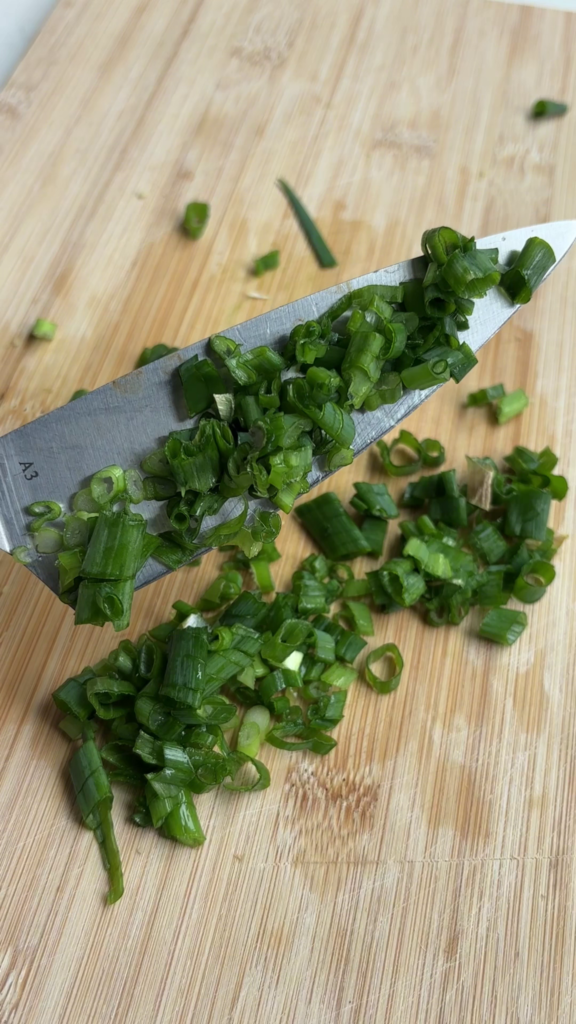
Scallions (2 stalks) Two full stalks, chopped by hand into small pieces. Use both the white and green parts — the white sections are more pungent and sharp, while the green tops are sweeter and more grassy. Together they give the sauce a rounded, layered flavor that using only one part wouldn't achieve. Chop them on the finer side, but not so fine that they lose their texture entirely. You want pieces that are present in the sauce, not dissolved into it.
Neutral Oil (4 tbsp) The oil is both the cooking medium and a structural ingredient in this sauce — it becomes the base that carries and binds the flavors of the ginger and scallion. Use a high-smoke-point neutral oil like canola or vegetable oil. Avoid olive oil, which has too low a smoke point and a flavor profile that clashes with the Cantonese aromatics. Four tablespoons is the right quantity for this amount of aromatics — enough to create a proper sauce that flows rather than a dry chopped relish.
Salt (1 pinch) Salt here isn't just seasoning — it draws moisture out of the ginger and scallion before the oil is added, helping the aromatics release their juices and ensuring the sauce has a more concentrated, cohesive flavor. Add it to the bowl with the aromatics before the oil goes in, not after.
Quick Tip: When smashing the ginger, use the flat side of your knife and hit firmly until the ginger flattens and cracks along its fibers. You're aiming for a texture that looks broken and rough rather than bruised — this maximizes the surface area that the hot oil will contact and extract flavor from.
Step 1: Prep the Scallions Wash and dry the scallion stalks thoroughly — any water left on them will cause dangerous spattering when the hot oil hits. Trim the root ends and chop the entire stalk, white and green parts together, into small pieces roughly 3 to 4mm in size. Place directly into a heat-proof bowl — ceramic or stainless steel, not plastic, which can warp or melt under the hot oil.
Step 2: Smash and Chop the Ginger Peel the ginger and place it on a cutting board. Using the flat back of a heavy knife or cleaver, hit the ginger firmly several times until it flattens and the fibers visibly break apart. Then chop it as finely as you can — finer than a standard mince, almost paste-like at the edges while still retaining some irregular texture. Add the ginger to the bowl with the scallions and add a pinch of salt. Toss briefly to combine.
Step 3: Heat the Oil Add 4 tablespoons of neutral oil to a small saucepan or wok and heat over medium-high heat. Watch it carefully — you're looking for the first wisps of smoke to appear at the surface of the oil. At this point, the oil is at or near its smoke point and is ready to use. This takes about 2 to 3 minutes depending on your stove. Don't walk away during this step; the window between correctly heated and overheated oil is narrow.
Step 4: The Sizzle Pour Carefully and deliberately pour the smoking-hot oil directly over the ginger and scallion mixture in the bowl. The sauce will crackle, spit, and sizzle loudly — this is exactly what you want. The violent reaction tells you the oil is hot enough to do its job. Use a spoon to immediately stir everything together, making sure the oil is incorporated evenly and no dry pockets of ginger or scallion remain. Taste and adjust salt if needed. Serve immediately or let cool to room temperature before storing.
The sauce will keep refrigerated in a sealed jar for up to a week. The flavor actually deepens slightly after a day as the oil continues to absorb the aromatics — making it an excellent candidate for batch cooking at the beginning of the week.
A classic, aromatic Chinese condiment made with fresh ginger, scallions, and hot oil. Perfect as a topping for poached chicken, noodles, or seafood.