
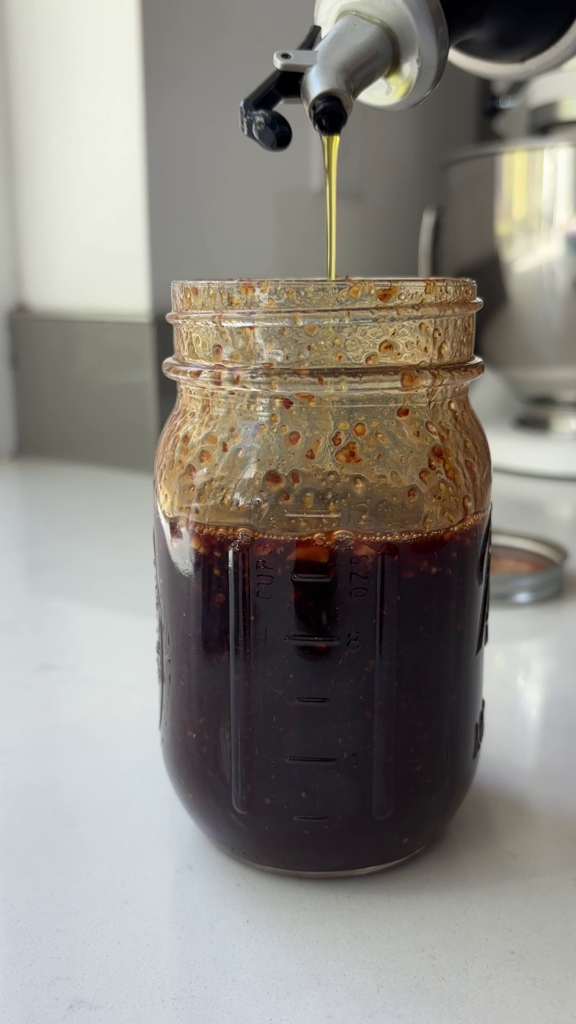
A good homemade vinaigrette is one of those things that takes five minutes to make and immediately makes you question why you ever bought bottled dressing. This balsamic vinaigrette is rich, tangy, and slightly sweet — built on a base of balsamic vinegar and Dijon mustard that emulsifies beautifully with oil and keeps in the refrigerator for weeks, ready to dress any salad you put in front of it.
A Perfectly Emulsified Sauce Dijon mustard is the ingredient that holds this vinaigrette together. It acts as an emulsifier — a bridge between the oil and vinegar that would otherwise separate immediately — producing a dressing that stays cohesive and coats every leaf evenly rather than pooling at the bottom of the bowl. Shake or whisk well before each use and the dressing comes back together in seconds.
Balanced Sweet, Tangy, and Savory Balsamic vinegar brings a deep, fruity acidity; honey adds a floral sweetness that rounds out the sharpness; minced garlic contributes a savory depth; and Dijon ties everything together with its subtle heat and complexity. Salt and black pepper finish the seasoning. The result is a dressing with no single dominant note — everything is in balance, which is why it works on virtually any salad.
Make a Batch, Use All Week This recipe is designed for batch making — one shaker jar in the refrigerator covers a full week of salads without any daily prep. The flavors actually deepen and mellow slightly as the dressing sits, making it noticeably better on day two than day one.
Balsamic Vinegar (1 cup) — The base and primary flavor of the dressing. Use a good quality balsamic — it doesn't need to be aged or expensive, but it should taste round and slightly sweet rather than sharp and thin.
Dijon Mustard (2 tbsp) — The emulsifier that keeps the oil and vinegar combined. Don't substitute with yellow mustard — the flavor profile is completely different and won't produce the same result.
Honey (2 tbsp) — Balances the acidity of the balsamic and adds a natural sweetness that sugar can't replicate in quite the same way. Raw honey works best.
Minced Garlic (1 tbsp) — Provides a savory, aromatic backbone to the dressing. If you prefer a milder garlic flavor, use half the amount or substitute with a small amount of garlic powder.
Combine the balsamic vinegar, Dijon mustard, minced garlic, honey, salt, and black pepper in a jar or bowl. Mix well until the mustard and honey are fully dissolved into the vinegar. Add the oil and shake or whisk vigorously until the dressing is fully emulsified and glossy. Taste and adjust — more honey for sweetness, more vinegar for tang.
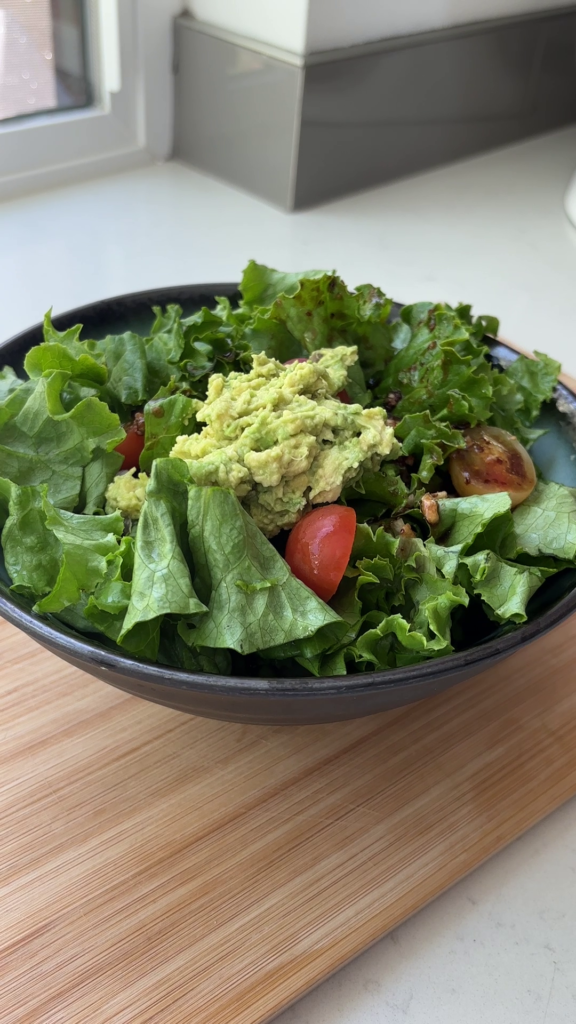
For the salad, arrange fresh lettuce leaves and halved cherry tomatoes in a bowl. Add a generous spoonful of smashed avocado on the side. Drizzle the vinaigrette over the top and serve immediately.
Add the oil last and always after the other ingredients are fully combined — adding it too early prevents proper emulsification. Pour it in slowly while whisking or in a steady stream while shaking for the smoothest result.
If the dressing separates after sitting in the refrigerator, simply shake the jar vigorously for 10 seconds before using. This is normal and doesn't affect the flavor.
Drizzle over any simple green salad — the combination of crisp lettuce, sweet cherry tomatoes, and creamy smashed avocado is the classic pairing. It also works beautifully as a dipping sauce for grilled vegetables, a marinade for chicken before grilling, or a dressing for a grain bowl with roasted vegetables and feta.
Store in a sealed jar in the refrigerator for up to two weeks. The garlic flavor will intensify slightly over time — if you prefer a milder dressing after the first few days, reduce the garlic to half a tablespoon. Always bring to room temperature and shake well before using as the oil will solidify slightly when cold.
For a creamier version, add two tablespoons of Greek yogurt to the dressing before the oil — it produces a thicker, more coating consistency. For extra depth, add a teaspoon of soy sauce alongside the salt. For a herb-forward version, add a teaspoon of dried Italian herbs or fresh thyme.
How much oil should I add? The standard ratio for a vinaigrette is 3 parts oil to 1 part vinegar. For this recipe that means approximately 3 cups of oil, but adjust to your own preference — more oil produces a milder, richer dressing; less oil produces a sharper, more acidic result.
Can I use a different vinegar? Red wine vinegar or apple cider vinegar both work well as substitutes and produce a lighter, less sweet dressing. The balsamic is what gives this recipe its characteristic depth and sweetness, so the flavor will be noticeably different with a substitution.
A simple make-ahead balsamic vinaigrette made with Dijon mustard, honey, garlic, and oil — a perfectly balanced dressing for any salad that comes together in five minutes.