
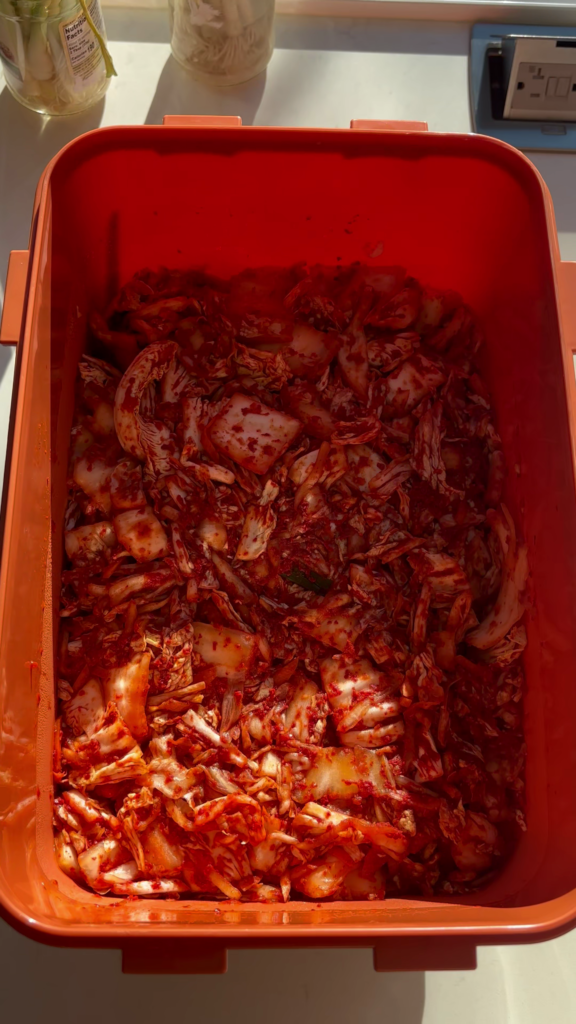
Making kimchi at home for the first time is one of those cooking experiences that changes how you think about fermentation entirely. There's something almost alchemical about watching a pile of salted cabbage transform — over hours of salting, then days of fermentation — into a complex, deeply flavorful, living food that gets better the longer you leave it alone. This isn't a dish you make on a Tuesday night for dinner. It's a project, a batch cook, a tradition. And when you do it right, you end up with 15 pounds of kimchi that will sit in your refrigerator for months, improving with every passing week.
This recipe is built around the traditional method: a glutinous rice porridge base that acts as the glue for the spice paste, a long salt soak that transforms the cabbage without destroying its crunch, a potent aromatic blend of garlic, ginger, and onion, and the two flavor pillars of great kimchi — fish sauce and gochugaru. It's the version that Korean home cooks have been making for generations, scaled for a large batch that makes the time investment genuinely worthwhile.
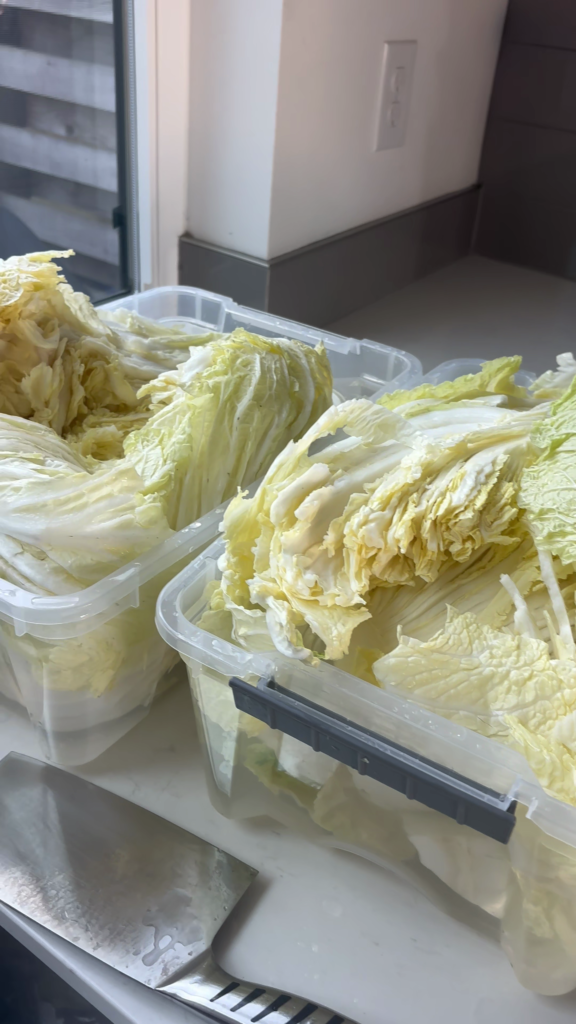
The single most important step in the entire kimchi process happens before any seasoning is added. Salting the cabbage for three to four hours in a brine draws out a significant portion of the water content through osmosis, fundamentally changing the texture of the leaves. The goal isn't to make the cabbage limp — it's to make it pliable. After the full soak, the stems should bend cleanly without snapping. That flexibility is the signal that the cabbage has lost enough water to ferment properly and absorb the paste, but still retains the structural integrity that gives kimchi its satisfying crunch. Under-salted cabbage stays too rigid and doesn't absorb flavor effectively. Over-salted cabbage collapses and never recovers its texture. Four hours with the right salt ratio is the sweet spot.
Most Western kimchi recipes skip the glutinous rice porridge step, and it shows in the finished product. The porridge — a simple mixture of rice flour, salt, and water cooked until thick and bubbling — serves as the adhesive that holds the entire spice paste together and helps it cling to every surface of the cabbage. Without it, the paste tends to slide off the leaves, pool at the bottom of the jar, and produce an uneven ferment where some pieces are intensely flavored and others are bland. With the porridge, every leaf gets an even, sticky coating of gochugaru, garlic, ginger, and fish sauce that stays in place through the fermentation process and produces a consistently flavored result from top to bottom of the jar.
One of the underappreciated aspects of homemade kimchi is that it's genuinely two different dishes depending on when you eat it. Freshly made kimchi — what Koreans call "geotjeori" — is bright, crunchy, and lightly spiced, closer to a dressed salad than a ferment. It's excellent immediately after assembly. Left at room temperature for one to two days and then moved to the refrigerator, it develops into the tangy, complex, deeply savory kimchi most people associate with Korean cooking. The longer it ferments, the more lactic acid develops, the deeper the flavors become, and the more probiotic activity occurs. Both versions are worth eating; the progression from fresh to fermented is part of what makes a large batch so rewarding.
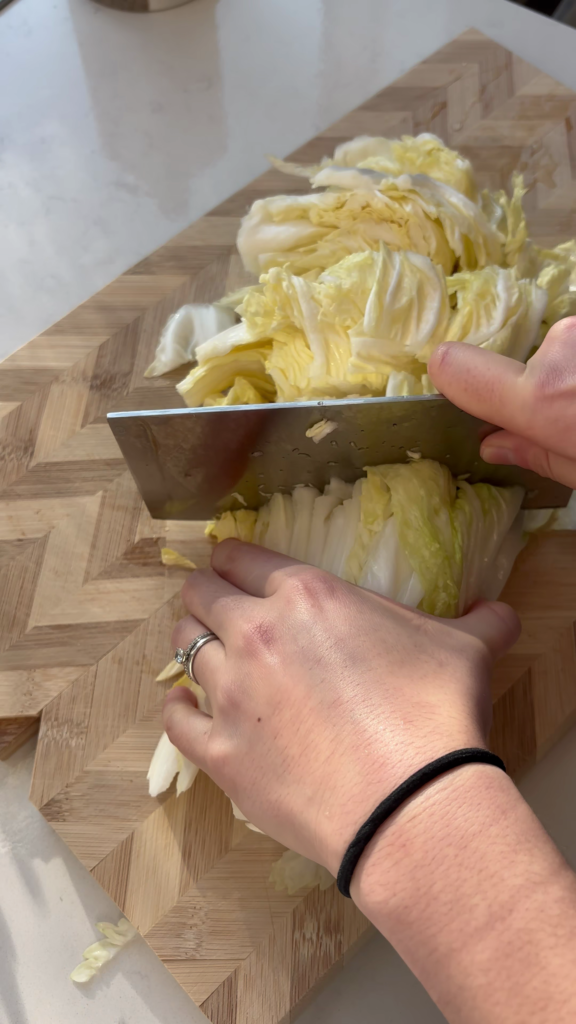
Napa Cabbage (15 lbs) A full 15-pound batch sounds like a lot, but the cabbage loses roughly a third of its volume during the salt soak as moisture is drawn out. Remove the tough outer leaves and the very base of the stem, then chop or quarter the heads before salting. Napa cabbage is specifically suited to this fermentation because its leaves are tender enough to absorb flavors readily while the ribs retain crunch even after months in a jar.
Gochugaru (Korean Red Pepper Powder, 1 cup) Gochugaru is not interchangeable with regular chili powder or cayenne. It has a specific flavor profile — fruity, smoky, moderately hot, with a brilliant red color — that defines the taste and appearance of kimchi. Using standard chili powder will produce a paste that's sharper and less complex, with a dull color that doesn't develop the same deep red throughout fermentation. Gochugaru is available at any Korean grocery store and increasingly at general Asian markets. Buy the coarse grind for kimchi — it provides better texture than fine-ground.
Fish Sauce (⅓ cup) Fish sauce is the umami engine of this recipe. It provides depth, saltiness, and — crucially — the free amino acids that feed the lactobacillus bacteria responsible for fermentation. A good quality Korean fish sauce (myeolchi aekjeot, made from fermented anchovies) is ideal. Vietnamese or Thai fish sauce also work well. The fish sauce flavor mellows significantly during fermentation; what tastes pungent in the raw paste becomes savory and deep in the finished kimchi.
Glutinous Rice Flour (2 tbsp) A small amount that does an enormous job. Cooked with water and a pinch of salt into a thick, translucent porridge, it becomes the binder that holds the entire paste together. Let the porridge cool completely before combining it with the other paste ingredients — adding hot porridge to raw garlic and ginger will begin cooking them and change the flavor profile of the finished paste.
The Aromatics: Garlic, Ginger, Onion Half a cup of garlic cloves, 30g of fresh ginger, and one medium onion — blended together in a food processor until smooth. This aromatic trinity forms the pungent, complex backbone of the kimchi paste. Processing them together ensures even distribution through the paste; hand-mincing at this volume would produce uneven flavor. The raw garlic is intentional — it ferments alongside the cabbage, its sharpness mellowing and deepening over time into something rich and savory.
Quick Tip: Rinse the salted cabbage thoroughly two to three times under cold running water before adding the paste. Kimchi that's too salty in the finished product almost always traces back to insufficient rinsing after the salt soak, not to excess seasoning in the paste. Taste a piece of the rinsed cabbage — it should be pleasantly mild, not noticeably salty.
Step 1: The Salt Cure Chop the Napa cabbage into roughly 2-inch pieces, discarding the very base and any damaged outer leaves. Dissolve ½ cup of salt in enough water to submerge the cabbage in a large container or pot. Add the cabbage and weigh it down if needed to keep it submerged. Let it soak for three to four hours, turning occasionally. The cabbage is ready when the stems bend without snapping and the leaves feel significantly softer and more pliable than when they started. Drain the brine and rinse the cabbage two to three times under cold water. Taste a piece — it should be very lightly salted, not briny. Drain thoroughly in a colander for at least 30 minutes, pressing out excess water.
Step 2: The Porridge Base Combine 2 tablespoons of glutinous rice flour with a pinch of salt and several splashes of water in a small pot — enough water to produce a pourable but thick consistency. Cook over medium heat, stirring constantly, until the mixture comes to a boil and thickens into a translucent, glossy porridge. Remove from heat and set aside to cool completely. The cooled porridge should be thick and slightly sticky — similar in consistency to a loose pudding. This is the adhesive that will hold your entire spice paste together.
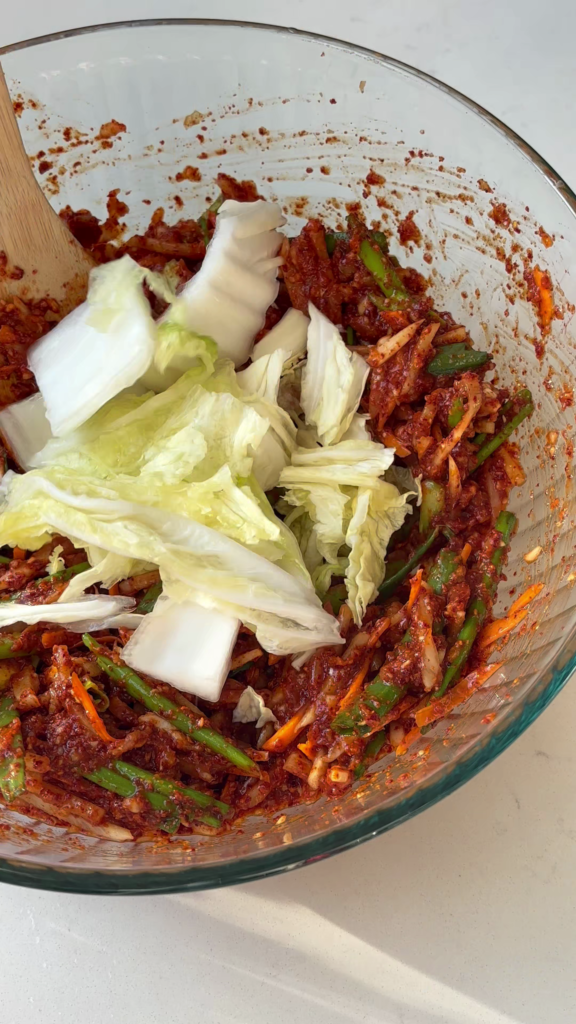
Step 3: The Aromatic Paste Combine the garlic cloves, ginger, and quartered onion in a food processor and blend until smooth. Add this aromatic paste to the cooled rice porridge in a large mixing bowl. Stir in the fish sauce and gochugaru, mixing until everything is fully incorporated into a thick, deeply red paste. Add the julienned carrots, julienned daikon, and chopped green onions and fold them through the paste. Taste the paste at this stage — it should be bold, spicy, and intensely savory. The flavors will mellow during fermentation, so don't be alarmed if it seems very strong at this point.
Step 4: The Deep Massage Add the drained cabbage to the paste bowl in large batches. Using gloved hands — gochugaru will stain skin for hours — work the paste into every leaf and crevice of the cabbage with firm, squeezing motions. This step isn't just mixing; it's actively pressing the paste into the layers of each cabbage piece so that every surface is coated and the paste has penetrated all the way through. Take your time here — five to ten minutes of thorough massaging makes a measurable difference in how evenly the kimchi ferments and how flavorful each piece ends up.
Step 5: Pack and Ferment Pack the finished kimchi tightly into clean fermentation jars or a large kimchi container, pressing firmly after each addition to eliminate air pockets. Leave two to three inches of headspace at the top — the kimchi will expand as gases are produced during fermentation. For fresh kimchi, it's ready to eat immediately. For fermented kimchi, leave it at room temperature for one to two days (longer in cooler weather), then move to the refrigerator. It will continue to ferment slowly in the refrigerator, developing more tang and complexity over weeks and months.
A robust and savory ferment that combines crisp Napa cabbage with a pungent, spicy paste of fish sauce, daikon, and premium Korean red pepper flakes.