
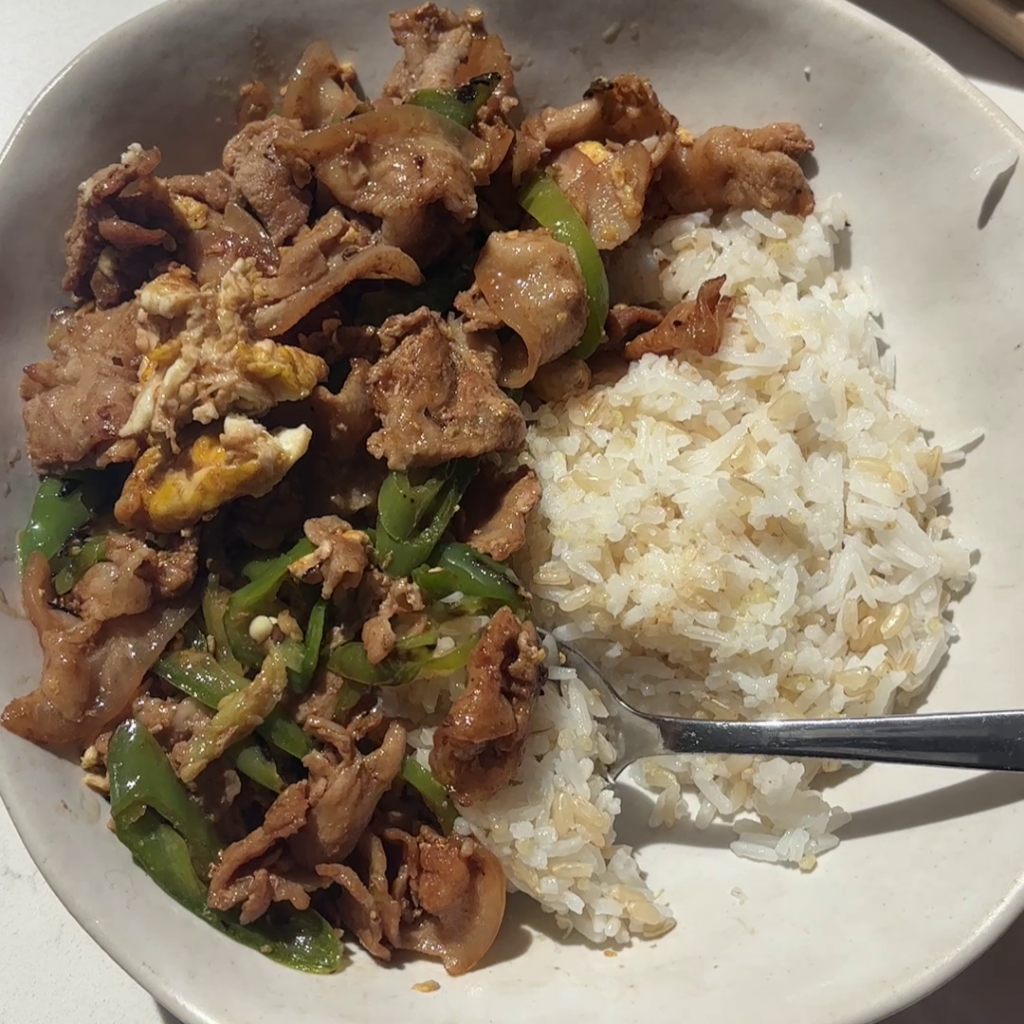
This is the kind of dish that looks and tastes like it took significantly more effort than it did. Three main components — pork belly rendered until the edges are golden and slightly crispy, tiger peppers dry-fried until blistered and charred, and eggs fried in the wok until the bottom is firm and lacy — each cooked separately to their individual best texture, then brought together in a glossy, savory sauce that ties everything into one deeply satisfying bowl over rice.
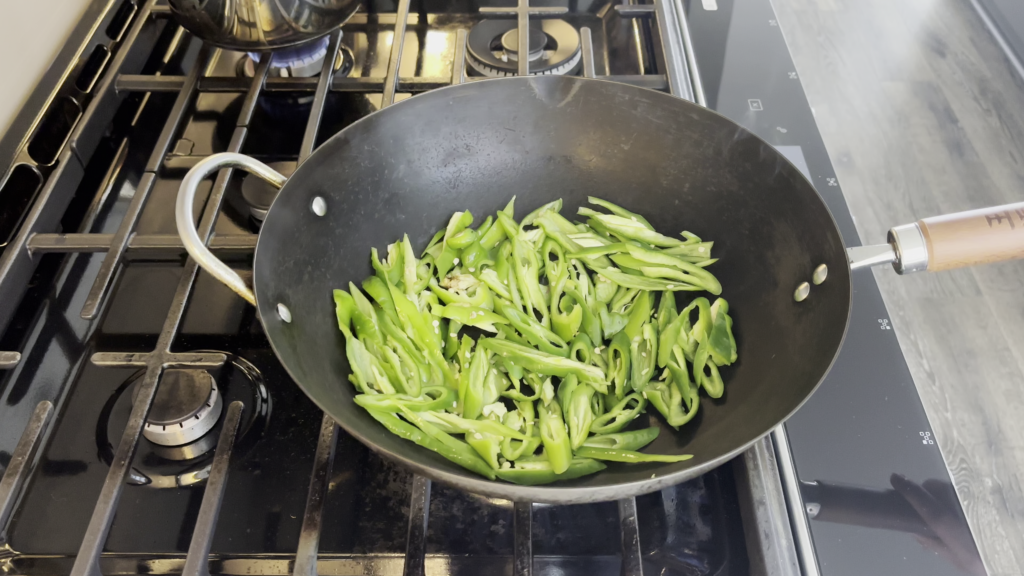
The Dry-Fried Pepper Technique Tiger peppers go into a hot wok with no oil — dry-fried until they blister, slightly blacken, and soften. This technique, common in Sichuan cooking, concentrates the pepper's flavor dramatically and adds a subtle smokiness that oil-fried peppers never develop. The char is intentional and important — it's the element that gives this dish a complexity that goes beyond a standard pork stir fry. Don't rush this step and don't be alarmed by the darkening; that color is flavor.
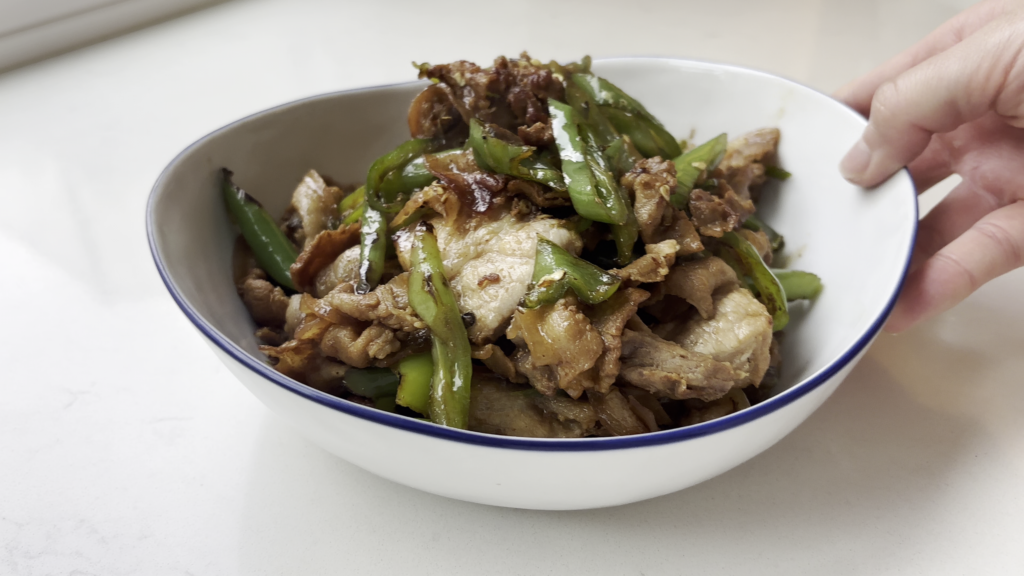
Three Textures, One Bowl Every component of this dish is cooked to a different texture, and the contrast is what makes it so interesting to eat. The pork belly edges are golden and slightly crispy from rendered fat. The eggs are firm on the bottom with a slightly broken, rich yolk throughout. The tiger peppers are soft and yielding with charred edges. Tossed together in the sauce, they stay distinct rather than blending into one uniform texture — each bite has a different combination depending on what you pick up.
A Sauce That Does the Heavy Lifting The sauce — soy sauce, Shaoxing wine, dark soy sauce, and oyster sauce — is added after the pork is already golden and the aromatics are fragrant. It reduces quickly in the hot wok, coating every surface with a glossy, deeply savory glaze in under a minute. The Shaoxing wine adds a fermented sweetness that balances the saltiness of the soy; the dark soy adds color and a slightly caramelized depth; the oyster sauce provides the thick, umami body that makes the sauce cling.
Pork Belly (½ lb, thinly sliced) — Thinly sliced pork belly renders its own fat in the wok, which then becomes the cooking medium for the garlic and sauce. The fat content is essential — lean pork won't produce the same crispy edges or the rich, rendered flavor.
Tiger Peppers (215g) — Thin-skinned, genuinely hot peppers that blister and char beautifully when dry-fried. Their smoky, slightly fruity heat is the backbone of this dish's flavor profile. Fresno or long red chilies are reasonable substitutes if tiger peppers aren't available.
Eggs (5) — Fried in the wok with oil until the bottom is firm and lacy, then broken up and cooked through before being set aside. The slightly runny yolk that breaks into the sauce when everything is tossed together at the end adds a richness that ties the whole dish together.
Shaoxing Wine (50ml) — The aromatic fermented rice wine that gives Chinese stir fry its characteristic depth. Don't substitute with regular white wine — the flavor profile is completely different.
Dry-fry the peppers first in a clean, oil-free wok. High heat, no oil, toss occasionally until blistered and charred in spots. Remove and set aside. This is the step most people skip and the one that makes the biggest difference to the finished dish.
Fry the eggs without moving them. Add oil to the same wok and crack the eggs in. Let them sit completely undisturbed until the bottom is firm and golden with lacy, crispy edges. Then break them up and cook through. The initial undisturbed fry is what gives you that restaurant-style fried egg texture rather than a plain scramble.
Render the pork belly low and slow before turning up the heat. Start the pork belly over medium heat to allow the fat to render gradually — this produces crispier edges than high heat, which seizes the meat before the fat has time to release. Once the fat is mostly rendered and the edges are golden, increase to high heat for the final browning.
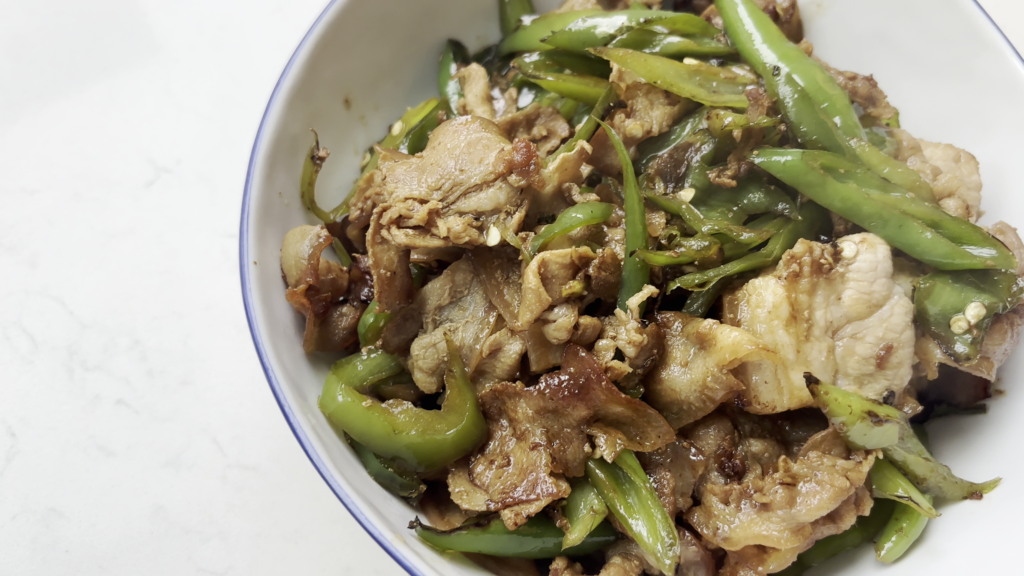
Add everything back and toss on high heat. Return the peppers and eggs to the wok with the sauced pork belly and toss everything together on the highest heat your stove can manage for one to two minutes. This final high-heat toss is what gives the dish its smoky wok character.
Don't wash the wok between components. Each ingredient leaves behind residual fat and flavor that enriches the next one. The pork fat that remains after rendering the belly is the best possible cooking medium for the garlic and sauce.
Slice the pork belly as thin as you can manage — partially freezing it for 20 minutes makes this significantly easier and produces more even slices that render and crisp more uniformly.
For a milder version, replace the tiger peppers with green bell pepper and one or two Thai chilies for just a background heat. For extra depth, add a tablespoon of doubanjiang (spicy bean paste) to the sauce mixture. For a vegetarian version, replace the pork belly with firm tofu pressed dry and pan-fried until golden.
A fast-paced stir fry featuring tender pork strips, fluffy scrambled eggs, and crisp peppers. Tossed in a savory soy glaze for a quick and nutritious dinner.