
There are desserts that are good, and then there are desserts that stop a conversation. Mango Sticky Rice is the second kind. It’s one of those dishes that manages to be simultaneously simple and perfect — a combination of textures and flavors so well-matched that it’s hard to believe the ingredient list is only five items long. Chewy, slightly translucent glutinous rice. Rich, salty-sweet coconut cream soaked all the way into each grain. Slices of ripe mango so juicy and fragrant they barely need anything alongside them. A final drizzle of reserved coconut glaze over the top.
This is Thailand’s most beloved dessert, sold by street vendors across Bangkok and Chiang Mai and eaten at any time of day — breakfast, midday snack, after-dinner sweet, late-night treat. Once you understand the technique, it’s easy to see why. Most of the work is passive: the rice soaks overnight, steams for 30 minutes, and then absorbs the coconut mixture while you slice the mango. The active time is minimal. The payoff is enormous.
Why You’ll Love This Recipe
The Perfect Chew
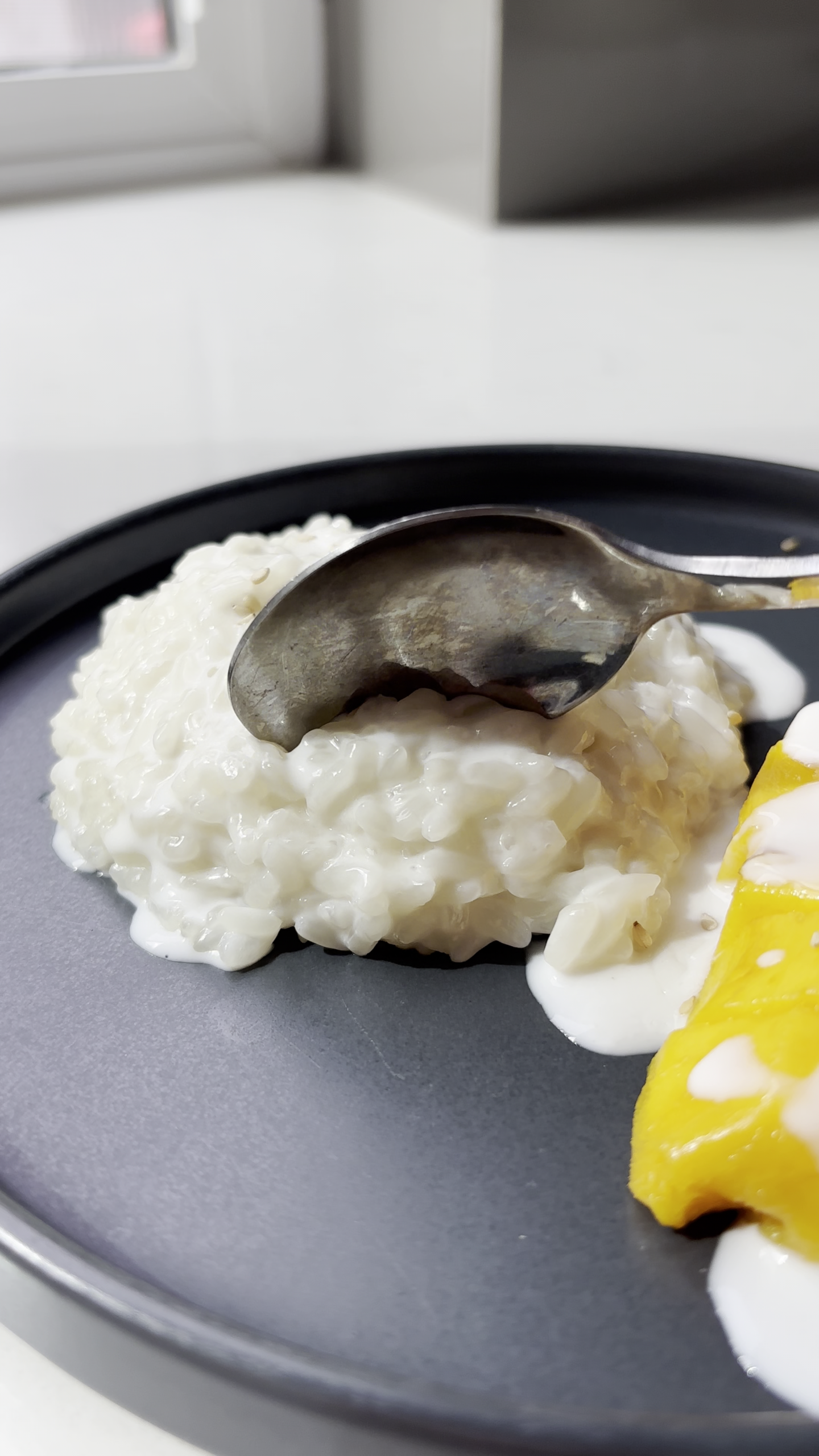
Glutinous rice — also called sticky rice or sweet rice — behaves completely differently from regular long-grain or jasmine rice. It has a much higher starch content, specifically a type of starch called amylopectin, which is what gives it that characteristic sticky, elastic, chewy texture after cooking. You can’t achieve this texture with regular rice, and you can’t rush the soaking step that makes it possible. Eight hours of cold water soaking fully hydrates the grains, allowing them to cook evenly during steaming without the outside becoming mushy before the inside is done. After 30 minutes in a steamer, the grains turn from chalky white to a beautiful semi-translucent pearl — that visual change is the signal that the texture is right.
The Sweet and Salty Balance
The coconut mixture that soaks into the rice is deceptively simple: coconut milk, sugar, and a pinch of salt. The salt is the element most people underestimate. In the context of a sweet dessert, salt doesn’t make things taste salty — it makes everything around it taste more intensely of itself. The mango tastes more mango-forward. The sugar tastes deeper and more caramel-adjacent. The coconut tastes richer and more tropical. It’s the same principle behind salted caramel, salted chocolate, and virtually every other sweet-salty combination that has become a modern staple. Don’t skip it and don’t reduce it — one pinch is the right amount.
The Luxurious Glaze
The technique of reserving a portion of the coconut mixture to use as a finishing drizzle is what elevates this from a home dessert to something that looks and tastes like it came from a proper Thai kitchen. The rice absorbs most of the coconut mixture during its resting period, which is exactly what you want — each grain fully saturated and rich. But that absorption also means the finished rice can look a little dry on the plate. The reserved sauce poured over at the end adds gloss, adds moisture, and gives the dessert that professionally finished look. It takes no extra effort because you made the sauce all at once — you just set some aside before combining the rest with the rice.
Key Ingredients
Sticky Rice / Glutinous Rice (2 cups) Glutinous rice is sold at any Asian grocery store, often labeled as “sweet rice” or “sticky rice.” The most important thing to know is that it cannot be substituted — regular rice, even short-grain Japanese rice, does not have the same starch composition and will not produce the same sticky, chewy result no matter how you cook it. Buy the right rice and the rest of the recipe is straightforward.
Coconut Milk (1 can, full-fat) Use full-fat canned coconut milk, not the refrigerated drinking variety and not the light version. Full-fat coconut milk has the cream content needed to produce a rich, thick sauce that coats the rice grains and creates that luxurious mouthfeel. Shake the can before opening — the cream and water separate during storage and need to be recombined. If your coconut milk has solidified into a thick layer at the top of the can, warm it gently before mixing with the sugar and salt.
Fresh Mango (1 ripe) The mango is the fruit element of the dish, and its ripeness determines everything. An underripe mango is starchy, fibrous, and tart in a way that clashes with the sweet richness of the coconut rice. A perfectly ripe mango is juicy, fragrant, and sweet with just enough natural acidity to cut through the fat of the coconut cream. Look for mangoes that yield slightly to gentle pressure and smell fragrant at the stem end. Ataulfo (honey) mangoes and Nam Dok Mai varieties are traditional choices; both are widely available and consistently sweet.
Sugar (¼ cup) Regular white granulated sugar works well here. The quantity produces a coconut mixture that is noticeably sweet but not cloying — it should taste pleasantly dessert-sweet, not candy-sweet. Taste the coconut mixture before combining it with the rice and adjust if needed.
Quick Tip: Pour the coconut mixture into the rice while the rice is still hot from the steamer. Hot rice acts like a sponge — the open, swollen grains absorb liquid readily and quickly. If you let the rice cool before adding the coconut mixture, it firms up and loses its ability to absorb efficiently, and you end up with rice that tastes of coconut only on the surface rather than all the way through.
Key Steps
Step 1: The Overnight Soak Place 2 cups of glutinous rice in a large bowl and cover with cold water by at least two inches — the rice will swell significantly as it absorbs water. Soak for a minimum of 8 hours, or overnight. There’s no shortcut here. Insufficiently soaked rice cooks unevenly: the outside softens while the center stays hard and chalky. After soaking, the grains should feel slightly softened and the water will have turned slightly milky from the released starch. Drain thoroughly before steaming.
Step 2: The Steam Set Transfer the drained rice to a steamer lined with cheesecloth or a clean kitchen towel — this prevents the small grains from falling through the steamer basket. Steam over boiling water for 30 minutes, checking occasionally to make sure the pot doesn’t run dry. The rice is done when the grains are uniformly translucent and have a springy, elastic texture when pressed between two fingers. Transfer immediately to a large bowl.
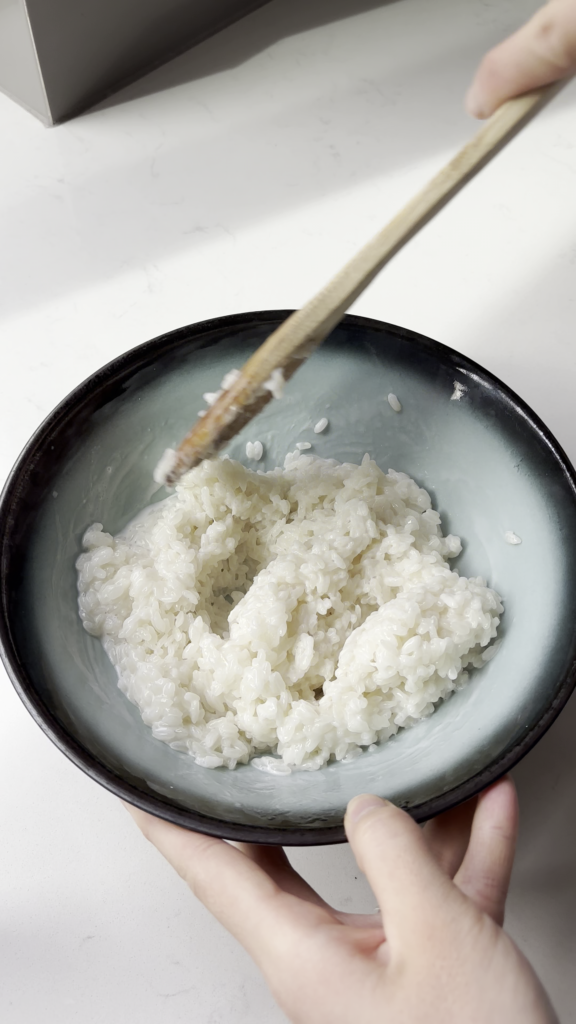
Step 3: The Coconut Infusion While the rice steams, whisk together the coconut milk, sugar, and salt in a bowl until the sugar is fully dissolved. If your coconut milk is cold from the refrigerator or the sugar isn’t dissolving easily, warm the mixture gently in a small pot over low heat — just enough to dissolve the crystals, not enough to boil. Set aside a few tablespoons of this mixture in a separate small bowl to use as the finishing drizzle. Pour the remaining coconut mixture over the hot steamed rice and stir gently to combine, making sure every grain is coated.
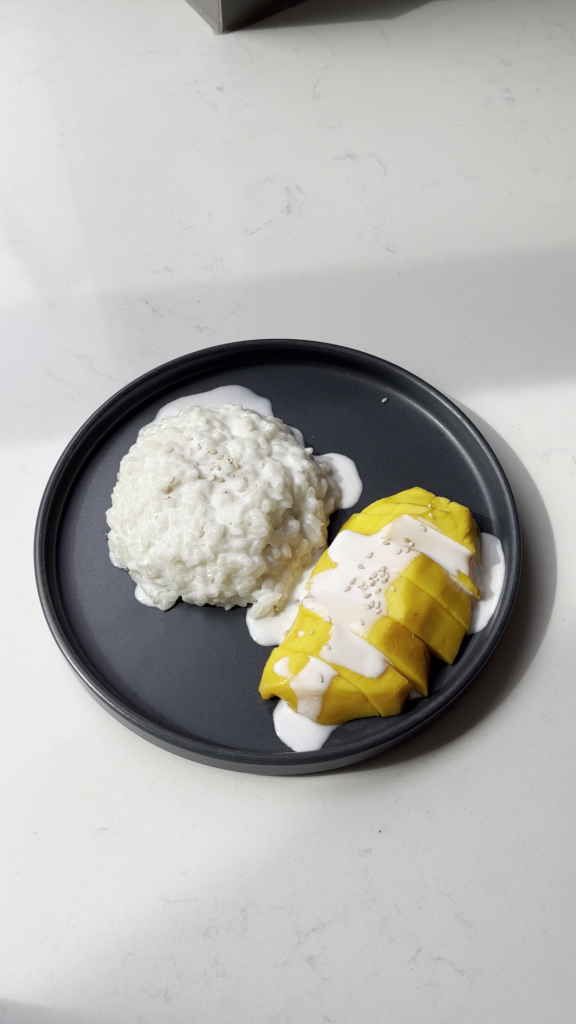
Step 4: The Rest and Serve Cover the coconut-soaked rice and let it rest for 10 to 15 minutes. This resting period is when the real absorption happens — the rice goes from wet and loose to cohesive and creamy as the coconut milk is drawn fully into each grain. While the rice rests, peel and slice the mango. To serve, mound the sticky rice onto a plate, arrange the mango slices alongside, and drizzle the reserved coconut mixture over both. Serve at room temperature.
Thai Mango Sticky Rice
Indulge in the ultimate Thai-inspired treat—sweetened steamed sticky rice served with fresh, ripe mango and an extra drizzle of coconut glaze.
Ingredients
Instructions
-
Soak glutinous rice in cold water for at least 8 hours or overnight. Drain well.
-
Steam drained rice over boiling water for 30 minutes until translucent and tender.
-
Mix coconut milk, sugar, and salt until dissolved. Reserve a few tablespoons for finishing.
-
Pour the remaining coconut mixture over the hot rice and stir to combine. Rest 10–15 minutes.
-
Slice the mango. Plate the rice alongside the mango slices.
-
Drizzle reserved coconut mixture over both and serve at room temperature.