
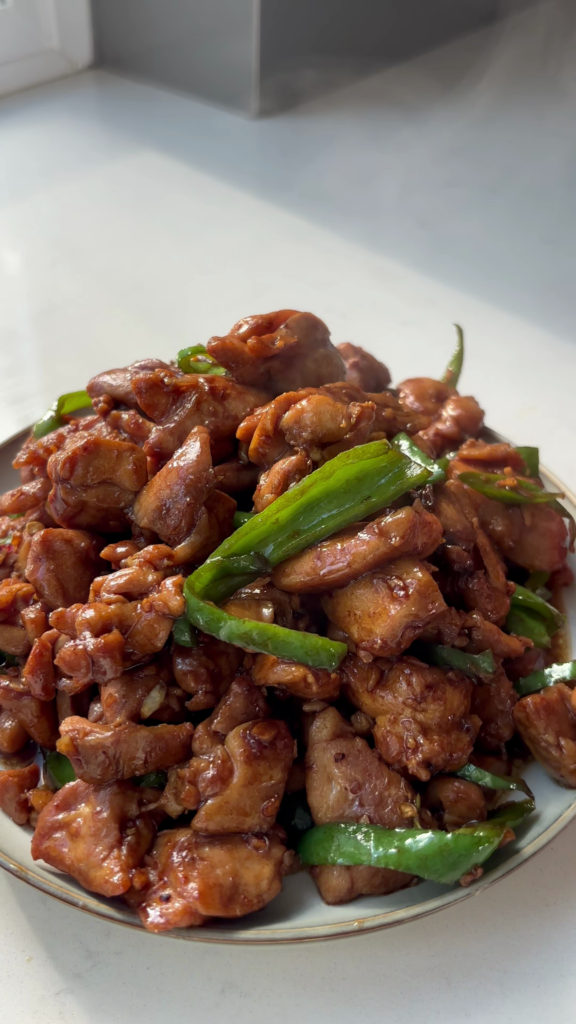
Not every great dish needs an overnight marinade, a multi-step sauce, or an hour of active cooking. Some of the best food is the kind that comes together fast, hits hard, and leaves you wondering why you ever ordered takeout. This Pepper Chicken Stir-Fry is exactly that. Chopped chicken thighs seared until crispy and golden in a screaming-hot wok, tossed with garlic, tiger peppers, and Thai chilies, then finished with a quick oyster sauce and soy glaze that coats every piece in a lacquered, mahogany-colored sheen.
Start to finish: fifteen minutes. No marination, no prep work beyond a little chopping. Just high heat, good ingredients, and a technique that delivers restaurant-quality results every time.
Why You’ll Love This Recipe
Zero-Prep Speed Without Sacrificing Flavor
The dirty secret of many “quick” recipes is that they still require 30 minutes of prep you have to do beforehand. This one doesn’t. There’s no marination window, no sauce that needs reducing in advance, no aromatics that require slow cooking to develop. Everything happens in the wok, in sequence, in real time. The garlic goes in raw and blooms in hot oil in seconds. The sauce builds as it hits the seared chicken and caramelizes into a glaze almost instantly. It’s a dish that rewards understanding heat and timing rather than advance preparation — and once you cook it a few times, it becomes pure muscle memory.
Texture First: The Crispy Sear
The defining characteristic of this dish — the thing that separates it from a soggy, sauced chicken stir-fry — is the sear. The chicken goes into a smoking-hot wok without any sauce, without any liquid, and it stays there undisturbed until it develops a genuinely crispy, browned exterior. This is the Maillard reaction at work: the browning of proteins and sugars on the surface of the meat that creates hundreds of new flavor compounds and provides the textural contrast that makes the dish work.
When the oyster sauce glaze goes in later, it coats a chicken piece that already has structure and crunch — it doesn’t soften the meat, it amplifies it. That contrast between the caramelized, slightly crispy chicken and the snappy, vibrant peppers is what makes every bite interesting.
Heat You Can Control
Tiger peppers are the star of this dish — thin-skinned, intensely flavored, and genuinely hot. But the recipe is flexible by design. If tiger peppers aren’t available at your local Asian grocery, any thin-skinned chili with good heat works well: Fresno peppers, long red chilies, or even serrano peppers will all deliver. The Thai chilies alongside them are small but punchy — they provide a different, more aromatic heat than the tiger pepper. Together they create a multi-dimensional spice that builds rather than just burning. Scale them up or down entirely based on your tolerance.
Key Ingredients
Chicken Thighs (4 pieces, chopped) Chopped thighs are the right call for stir-fry: higher fat content means they can withstand the high heat of a wok without drying out, and the irregular pieces created by chopping give you more exposed surface area for searing. More surface area means more Maillard reaction, which means more flavor.
Tiger Peppers Tiger peppers — sometimes called “tiger skin peppers” or “hupi peppers” — are a Sichuan-influenced ingredient known for their thin skin and intense, slightly smoky heat. They’re ideal for quick wok cooking because they soften fast without losing their vibrant color. Sliced lengthwise, they integrate naturally into the dish rather than sitting on top as a garnish.
Dark Soy Sauce This is the ingredient responsible for the dish’s visual appeal. Dark soy sauce is thicker, less salty, and significantly more concentrated than regular soy sauce — a small amount gives the finished dish a deep mahogany color that looks professional and signals caramelization. Don’t substitute light soy sauce here; the color and body will be noticeably different.
Oyster Sauce The umami anchor of the glaze. Oyster sauce has a thick, slightly sweet, deeply savory character that helps the sauce cling to the chicken rather than running off. Combined with the two soy sauces, it creates a glaze with real body — not watery or thin, but coating and glossy.
Quick Tip: The wok must be visibly smoking before the chicken goes in. A wok that isn’t hot enough will cause the chicken to steam in its own moisture rather than sear, resulting in pale, soft meat instead of the crispy exterior this dish is built on. Heat it longer than you think you need to.
Key Steps
Step 1: The Crispy Sear Grease the wok with cooking oil and heat on high until the oil shimmers and the first wisps of smoke appear. Add the chopped chicken thighs in a single layer — resist the urge to stir immediately. Let the chicken sit undisturbed for 90 seconds to 2 minutes until a golden crust develops on the bottom. Then toss and continue cooking until the pieces are browned on most sides and cooked through, about 4 to 5 minutes total. The wok should be loud and aggressive throughout this stage. If it’s quiet, the heat isn’t high enough.
Step 2: The Aromatic Bloom Add the minced garlic to the wok and toss immediately — garlic burns fast at wok temperature, and you want it fragrant and golden, not bitter and black. Toss constantly for 20 to 30 seconds, keeping the garlic moving, until the raw smell transforms into something sweet and toasty. This happens quickly, so have the sauces ready to go before the garlic hits the pan.
Step 3: The Glaze Build Pour in the soy sauce, dark soy sauce, and oyster sauce. The liquid will hit the hot wok and begin reducing almost immediately — toss the chicken aggressively to coat every piece in the sauce as it thickens and caramelizes. The dark soy will deepen the color rapidly; within 30 to 45 seconds the sauce should be thick, glossy, and clinging to the chicken. If it reduces too fast, add a small splash of water to loosen it.
Step 4: The Pepper Flash Add the sliced tiger pepper and chopped Thai chilies. Toss everything together on high heat for one final minute — enough time for the peppers to pick up some color and soften slightly at the edges while still maintaining their snap and vibrant green color. Overcooked peppers lose their brightness and turn limp; one minute is all they need. Plate immediately and serve over steamed rice.
Tips for Wok Success
Use the highest heat available. Stir-fry is a high-heat technique, and most home stoves don’t get as hot as a restaurant wok burner. Compensate by preheating the wok longer than feels necessary and cooking in small batches if needed.
Have everything prepped before you start. Once the chicken hits the wok, the entire dish takes about 8 minutes. There’s no time to chop garlic or slice peppers mid-cook — everything should be ready to go before the heat goes on.
Don’t cover the wok. Covering traps steam and softens the crust you worked to develop. Keep it open and keep the heat high.
20-minute Pepper Chicken Stir-Fry
A savory and spicy stir-fry that skips the marination for a quick, "crispy-skin" finish topped with a rich oyster sauce glaze.
Ingredients
Instructions
-
Grease a wok with cooking oil and heat until very hot.
-
Add chicken thighs and cook until they are crispy and a little brown.
-
Stir in the minced garlic and toss briefly until fragrant.
-
Add soy sauce, dark soy sauce, salt, and oyster sauce. Stir to coat the chicken evenly.
-
Toss in the sliced tiger pepper and Thai chili peppers.
-
Stir-fry on high heat for another minute until the peppers are slightly softened but still vibrant. Serve immediately.