
Cantonese cuisine has a philosophy that runs through almost every dish: start with the best ingredient you can find, then get out of its way. Nowhere is this more evident than in steamed fish. No heavy sauces, no complex spice blends, no technique that masks what’s underneath. Just a fresh fillet, a hot steamer, a handful of aromatics, and the restraint to let the fish speak for itself. The result — when done correctly — is something that tastes cleaner, more delicate, and more purely of the sea than almost any other preparation.
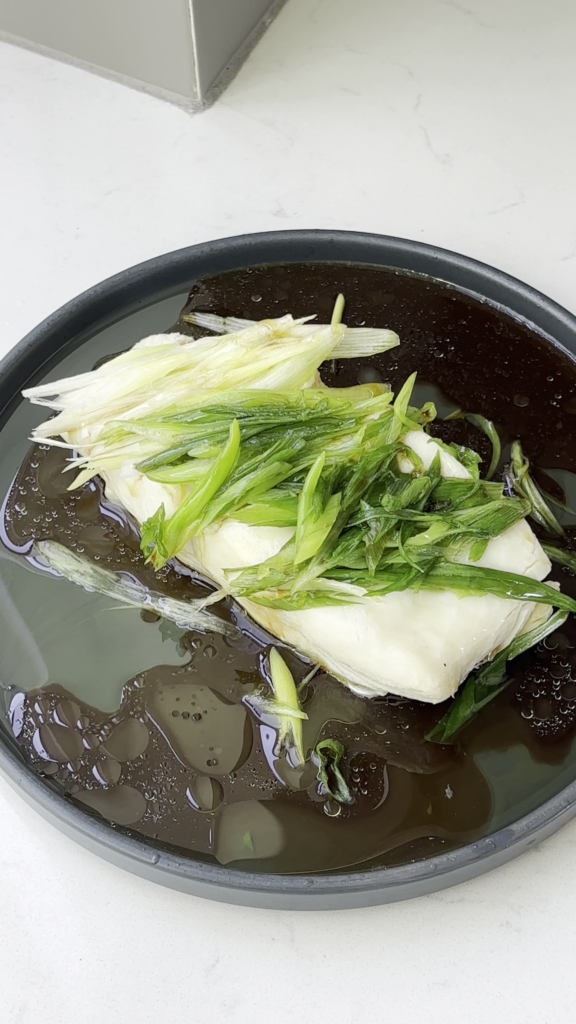
This Traditional Cantonese Steamed Cod is built on that philosophy. A thick cod fillet, seasoned with salt and cooking wine, steamed for exactly eight minutes, then finished with fresh scallions, smoking-hot oil, and a splash of soy sauce and vinegar. The technique is simple. The timing is precise. And the outcome is a dish that looks and tastes like something from a proper Cantonese seafood restaurant — silky, aromatic, and perfectly balanced between rich and bright.
Why You’ll Love This Recipe
Silky Texture Through Precision
The difference between perfectly steamed fish and overcooked fish is often less than two minutes. Steaming a 500g cod fillet for exactly eight minutes hits the sweet spot where the flesh is just cooked through — it flakes cleanly at the touch of a chopstick, holds its shape on the plate, and has a buttery, almost custardy texture that you simply cannot achieve any other way. Go longer and the proteins tighten, the moisture escapes, and you’re left with something dry and chalky. Eight minutes is the number, and it’s worth setting a timer.
Cod is an ideal fish for this preparation. It’s a sturdy white fish with a naturally buttery fat content that responds beautifully to gentle steaming — it stays moist, absorbs the ginger and soy flavors readily, and has a clean, mild flavor that doesn’t compete with the aromatics around it.
The Sizzle Finish
The most dramatic moment in this recipe — and the one that does the most flavor work — is the hot oil pour. A pile of freshly chopped scallions goes over the cooked fish, and then smoking-hot oil is poured directly on top. The sound is immediate and violent: a sharp, crackling sizzle as the oil hits the raw scallions and flash-cooks them in seconds. The heat releases the scallion’s essential oils and transforms them from raw and sharp to fragrant and slightly sweet, all while keeping them bright green and texturally present. The aroma that rises from the bowl in that moment is the smell of Cantonese cooking at its most essential.
This technique — pouring hot oil over fresh aromatics — appears throughout Chinese cooking for good reason. It’s one of the most efficient flavor extraction methods in the kitchen, and it costs almost no extra time or effort.
Bright, Balanced Umami
The final layer — a splash of soy sauce and vinegar — is what ties the whole dish together. Soy sauce brings depth and salinity; the vinegar adds an acidity that cuts cleanly through the richness of the cod and the oil, lifting the entire dish and preventing it from feeling heavy. It’s a small addition with an outsized impact. The ratio doesn’t need to be precise — taste as you go and find the balance that works for you.
Key Ingredients
Cod Fillet (500g) A thick, center-cut cod fillet is ideal. The thickness ensures the fish stays moist throughout the eight-minute steam — thin fillets cook through faster and have less margin for error. If cod isn’t available, other sturdy white fish work well: sea bass, grouper, and halibut are all excellent substitutes. Whole fish can also be used with the same method; just score the flesh on both sides before seasoning to help the aromatics penetrate.
Cooking Wine Shaoxing rice wine is the traditional choice and the best one. It has a nutty, slightly sweet flavor that complements seafood beautifully and does an excellent job of neutralizing any residual fishiness in the fillet. Dry sherry is a reasonable substitute. Don’t use regular white wine — the flavor profile is different enough to affect the dish.
Ginger Slices Four slices of fresh ginger placed directly on top of the fish before steaming. Ginger is a natural deodorizer for seafood — its compounds actively neutralize the trimethylamine compounds responsible for fishy odor. Beyond function, it adds a warm, gently spicy undertone that infuses the flesh of the fish during steaming. Use fresh ginger, not ground — the aromatic compounds in dried ginger are completely different.
Scallions A full bunch, chopped, used as the bed for the hot oil pour. The quantity matters — you want enough scallions to completely cover the surface of the fish so that the oil contacts them evenly across the whole fillet. Don’t skimp here.
Quick Tip: After steaming, the plate will have collected liquid from the fish and the steam. Discard this liquid before adding the scallions and hot oil — it tends to be watery and slightly bitter, and removing it gives the final dish a much cleaner, more refined flavor.
Key Steps
Step 1: The Marinade Rub Season the cod fillet generously with salt on both sides. Then rub the cooking wine all over the fish, making sure to coat the top, bottom, and edges. Let it sit for a few minutes while you prepare the rest of the setup. This brief marination cleans the fish of any residual fishiness and seasons the flesh before it meets the heat.
Step 2: The Timed Steam Place the ginger slices on top of the seasoned fillet and transfer it to a steaming plate. Bring a pot of water to a full, rolling boil before placing the fish inside — starting in cold or warm water dramatically affects the cooking time and can result in uneven cooking. Steam on high heat for exactly eight minutes. Keep the lid on for the entire duration and resist the urge to check the fish before the timer goes off.
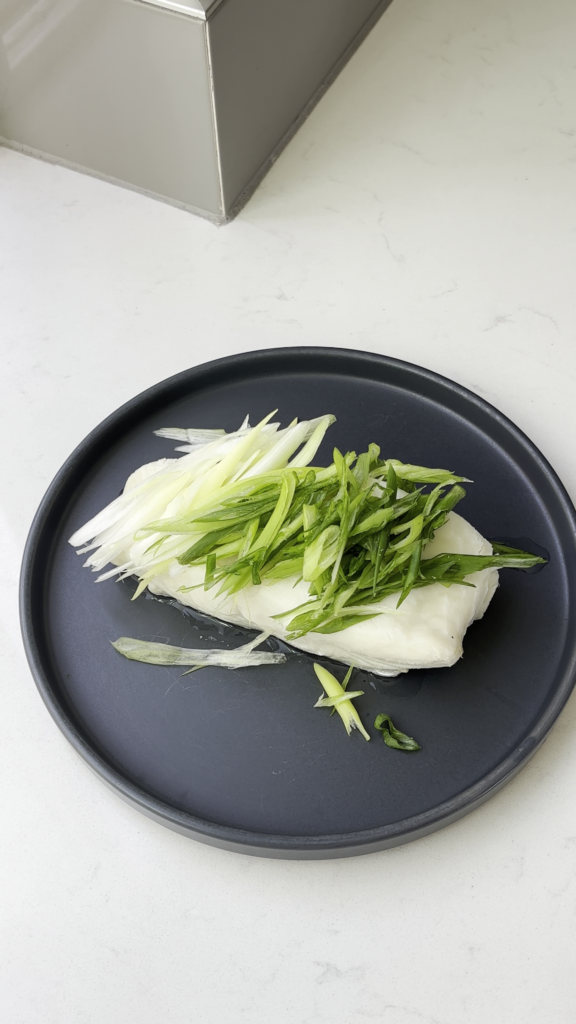
Step 3: The Scallion Crown Remove the fish from the steamer carefully. Tip the plate slightly to discard the accumulated steaming liquid. Cover the entire top surface of the fish with the chopped scallions — use enough that you can barely see the fish underneath. The scallions are the surface the hot oil will react with, so coverage matters.
Step 4: The Final Splash Heat cooking oil in a small pan over high heat until it just begins to smoke. Pour it slowly and deliberately over the scallion-covered fish — pour it in a steady stream from one end of the fillet to the other so the heat is distributed evenly. The sizzle should be immediate and aggressive. Finish by drizzling soy sauce and a splash of vinegar over the entire dish. Serve immediately, directly from the plate.
Cantonese Steamed Fish
A refined Cantonese staple featuring a thick cod fillet gently steamed with ginger and finished with a signature splash of hot oil and savory soy vinegar.
Ingredients
Instructions
-
Season cod with salt on both sides. Rub cooking wine all over the fillet.
-
Place ginger slices on top of the fish. Steam over boiling water for exactly 8 minutes.
-
Remove from steamer. Discard accumulated liquid on the plate.
-
Cover the fish completely with chopped scallions.
-
Heat oil until smoking and pour directly over the scallions.
-
Drizzle soy sauce and vinegar over the entire dish and serve immediately.